
New drug classes, discovered at machine speed
AI proven in antibacterials, expanding into new therapeutic areas
Built to explore new chemical space and discover oral small molecules
ArrePath begins with the desired candidate profile, then deploys target-specific AI/ML workflows to evaluate novel chemistry while optimizing potency and developability in parallel.
Discovery at machine scale
~4 weeks
Rapid program start
Target selection to validated, deployed target-specific AI/ML workflows
1M+
Machine-scale exploration
Molecules evaluated per design cycle
Novel chemistry
6 new antibacterial classes
6 new MOAs discovered in 4 years
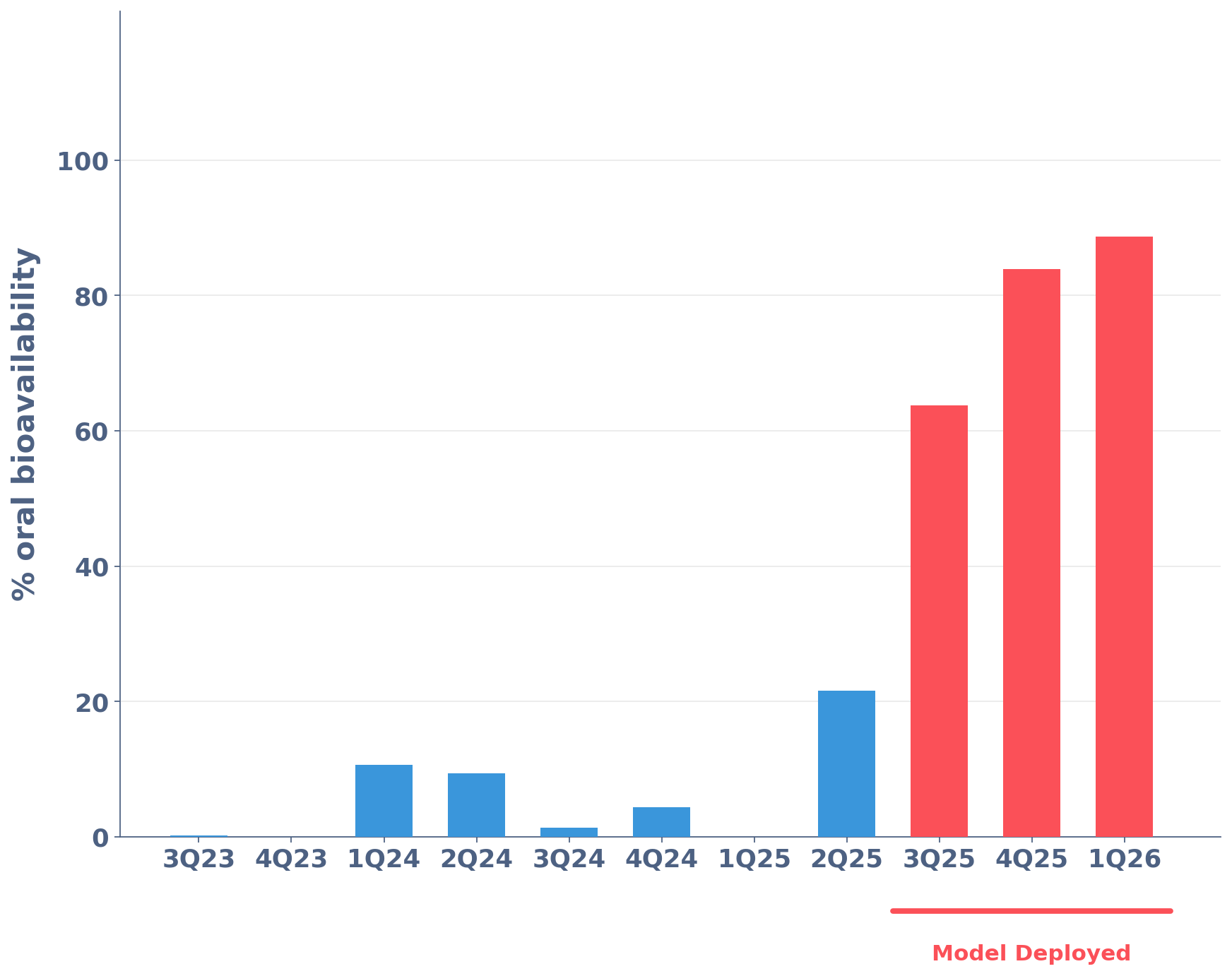
Solving oral bioavailability — one of medicinal chemistry’s hardest problems
- A model trained on public data alone generalized to a novel chemical series it had never seen.
- Applied across every molecule made before deployment, it identified the progenitor of the lead series and helped advance oral bioavailability from below 10% to above 80%.
- The result demonstrates simultaneous optimization of potency and developability rather than a potency-first retrofit.
Proven in antibacterials. Built to expand beyond.
ArrePath validated the platform by discovering six new antibacterial classes with six new mechanisms of action in four years.
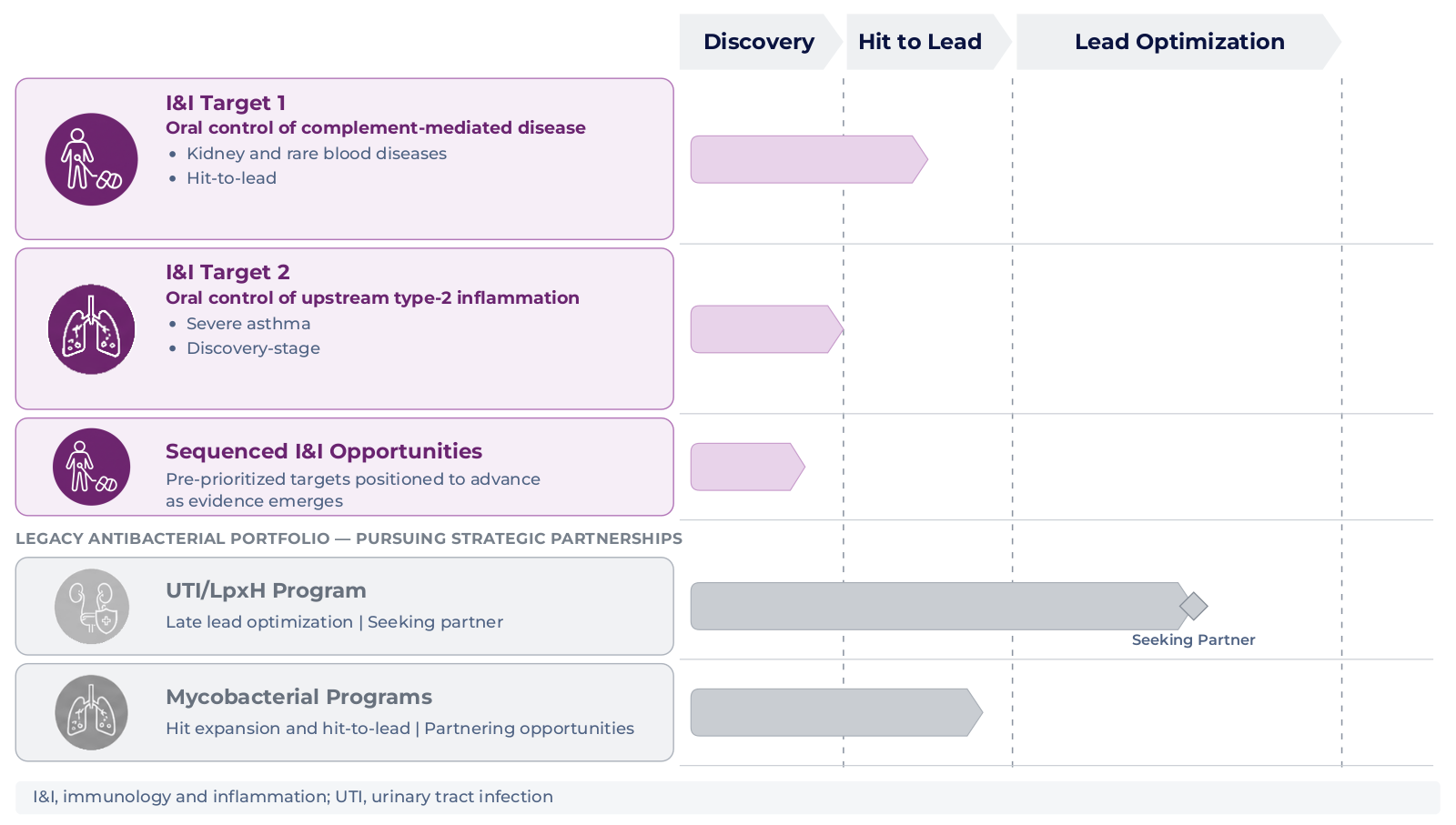
The same platform is now being applied to validated targets where oral-small-molecule options are limited.
Get in touch
We welcome partnering and investor conversations about the platform and our programs.
Contact Us →